
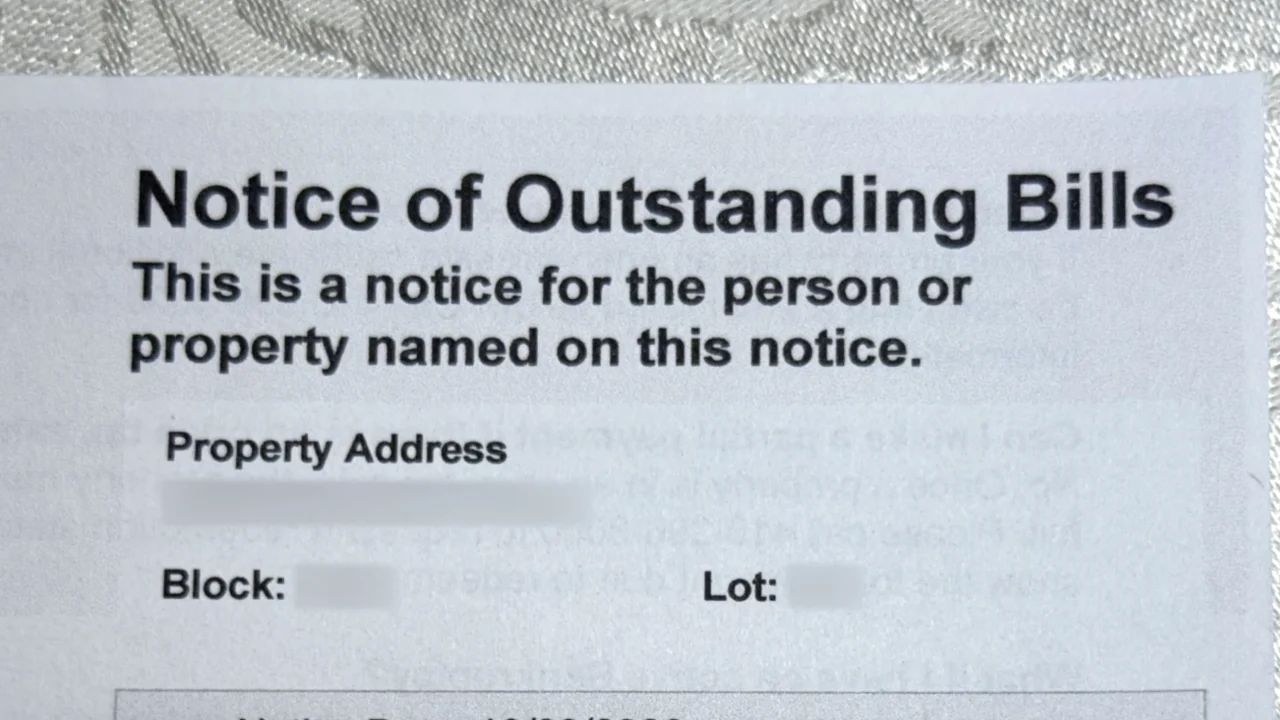
BALTIMORE, Md. — Baltimore homeowners are questioning unexpected bills for property taxes and other charges, some dating back more than a decade, after the city’s Finance Department mailed more than 50,000 outstanding balance notices in October.
According to the department, 50,123 notices were sent to property owners and customers, representing approximately $504.6 million in outstanding balances. The total includes property taxes, water bills, environmental citations, special benefit charges and other municipal fees.
Some residents say they were surprised to receive notices for charges they believed had already been paid.
Ellen Townsend and Tywanna Gardner contacted WMAR-2 News reporter Mallory Sofastaii after receiving letters listing older property tax balances. Both homeowners said they had paid their property taxes in full.
“I pay my bill in full. So I don’t know where this is coming from,” Townsend said.
Her notice listed an outstanding balance of $40.35 from the 2013–14 tax year and 53 cents from 2015–16. Gardner received a notice requesting payment of $1,299.36.
Why Baltimore Residents Are Receiving Old Bill Notices
Baltimore’s Finance Department said the Bureau of Revenue Collections sends notices every October to inform customers about outstanding property-related balances that could potentially lead to tax sale.
The department explained that the letters are intended to help residents resolve unpaid charges and identify billing errors before they become larger problems.
“The goal of sending these letters is to facilitate a resolution of outstanding bills and to identify instances where balances may be incorrect,” the department said.
In previous years, the notices primarily covered past-year real property taxes and current or previous special benefit bills. However, recent system updates allow the city to include outstanding balances from multiple years and additional billing categories.
This year’s notices cover real property taxes, municipal water bills, part-year bills, special benefits, alley and footway charges, environmental citations and miscellaneous bills.
Breakdown of Baltimore’s $504.6 Million in Outstanding Balances
The Finance Department provided the following breakdown of the outstanding amounts included in the notices:
| Bill Category | Amount Due |
|---|---|
| Alley and footway charges | $1.6 million |
| Environmental citations | $55 million |
| Municipal water bills | $164.2 million |
| Part-year bills | $2.8 million |
| Miscellaneous bills | $104.7 million |
| Special benefit charges | $4.6 million |
| Real property taxes | $171.7 million |
| Total | $504.6 million |
The city previously explained that these balances were carried forward from earlier billing periods and do not necessarily represent new charges. Depending on the account, the amounts may include unpaid balances, late fees, penalties and other charges from previous years.
The department also clarified that unpaid water bills can remain as liens against properties. However, unpaid water bills alone do not make a property eligible for tax sale.
Lawyers Recommend Checking Payment Records Before Paying
The unexpected notices have also raised concerns about whether the listed balances are accurate.
Steven Kappen, a tangled title project manager with Maryland Volunteer Lawyers Service, said one of his clients contacted him after receiving a letter they initially suspected might be a scam.
“The letter was unexpected for them,” Kappen said.
His organization compared the notice with the client’s existing records and confirmed the charges listed on that particular letter. However, that review does not establish whether the balances in other residents’ notices are correct.
Kappen recommends that homeowners compare the city’s claims with their payment receipts, bank records and account histories before making payments.
If a notice claims that an older property tax bill remains unpaid, residents should check whether they previously paid that amount and whether the payment was properly credited to their account.
He also warned that some descriptions on the notices may not provide enough information for homeowners to understand the charges.
“The letter that I saw, there was a charge that was just listed as miscellaneous, so that isn’t very helpful for you to find out what that charge is related to,” Kappen said.
Some notices may also include balances that residents are already working with the city to resolve, rather than entirely new charges.
Kappen said homeowners may still be able to verify older payments even if they no longer have all their original receipts.
Questions Remain About Older Balances and Payment Histories
WMAR-2 News contacted Baltimore’s Finance Department to ask how residents can obtain an itemized account history showing how outstanding charges were calculated and how previous payments were applied.
The station also asked why some homeowners are only now discovering property tax balances dating back more than a decade, particularly because earlier October notices already included past-year property taxes.
Those questions remain unanswered.
Residents who receive notices may want to request a detailed breakdown of each charge, including the original billing year, additional fees, payment credits and any adjustments made to their accounts.
This information can help homeowners determine whether the balance is legitimate or whether a billing correction is needed.
October 31 Payment Date Is Separate From Tax Sale Deadline
Some homeowners received notices listing October 31 as a payment date, creating additional concerns about how quickly they need to respond.
However, Kappen explained that the October 31 date is separate from Baltimore’s broader tax-sale process, which continues into the spring.
According to the city’s tax sale process information, the general tax-sale timeline does not operate on an October 31 deadline.
“The general tax sale timeline does not operate on an October 31st deadline,” Kappen said.
Still, residents should not ignore the notices. WMAR-2 News asked the Finance Department to explain what the October 31 date means for unpaid or disputed balances and whether additional fees or collection actions could continue while an account is under review.
Kappen said giving homeowners an opportunity to address outstanding charges before selling or transferring a property can be helpful. However, he acknowledged that the possibility of tax sale remains a significant concern.
“It’s definitely a tax sale concern for people,” he said.
His recommendation is to address the issue as soon as possible rather than wait until a property transaction or collection action makes the situation more complicated.
“Let’s get to the bottom of it now, whether or not that’s paying or contesting or following up with the city,” Kappen said.
How Baltimore Homeowners Can Check Their Accounts
Residents who receive an outstanding balance notice should review the charges carefully before deciding how to proceed.
Kappen recommends checking property tax accounts, municipal water bills and environmental citations associated with their properties on a regular basis.
Homeowners who have lost older receipts may still be able to request account information to help verify whether previous payments were properly credited.
A city lien certificate can provide a broader accounting of charges attached to a property, although obtaining one involves a fee. Kappen does not recommend purchasing one routinely just to monitor an account when residents can check individual records for free.
Residents who believe their notices contain incorrect balances or need an explanation of specific charges can contact Baltimore’s Bureau of Revenue Collections at 410-396-3000.
The Finance Department previously told WMAR-2 News that it would review disputed bills and remove or correct charges found to be inaccurate on a case-by-case basis.
For homeowners facing unexpected bills, checking payment records and requesting a detailed explanation from the city may be the first steps toward resolving the issue.
Correction (Nov. 4): Baltimore’s Finance Department initially mislabeled $2.8 million in part-year bills as parking citations in the breakdown provided to WMAR-2 News. The figures above have been corrected. Parking fines are not liens against real property and were not included in these notices.
