The quality of life in the United States can vary significantly from one state to another. While some places offer strong healthcare systems, affordable childcare, safe communities, and better working conditions, others continue to face challenges that can make everyday life more difficult for residents.
A state’s economy and job opportunities do not always tell the whole story. Access to medical care, the cost of raising children, crime rates, environmental conditions, and protections for workers and minority communities can also influence how comfortable and secure people feel where they live.
According to CNBC’s America’s Top States for Business study, several states received particularly low marks for quality-of-life factors in 2026. The assessment considers issues such as healthcare access, childcare availability, crime, air quality, worker protections, and inclusiveness.
Quick Guide
- State: United States
- Category: Quality of Life and State Rankings
- Based On: CNBC’s America’s Top States for Business study (2026)
- Includes: Healthcare access, crime rates, childcare availability, air quality, worker protections, and inclusiveness
- Best For: Readers researching U.S. states, relocation decisions, and quality-of-life comparisons
- Note: Rankings and statistics reflect the supplied 2026 study details and should be checked against the original report before publication.
- Source: CNBC’s America’s Top States for Business study
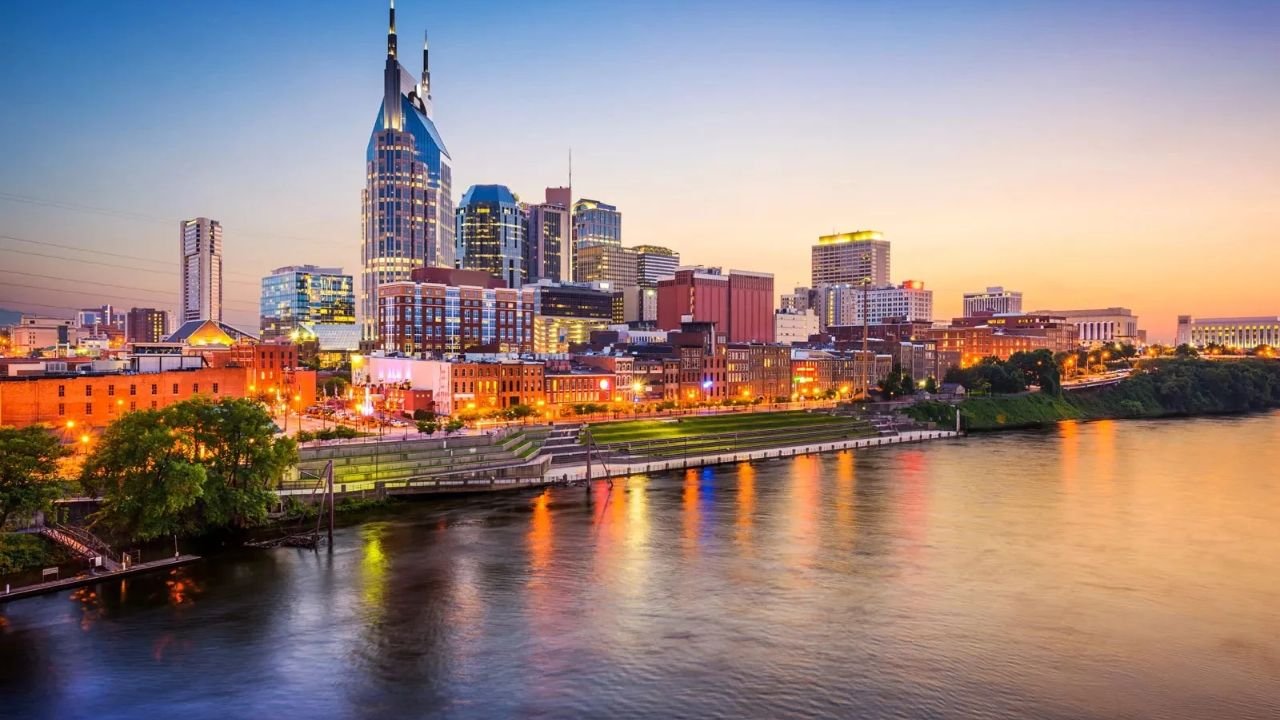
The results place Tennessee at the bottom of the ranking, followed by Texas, Indiana, Louisiana, and Georgia. Here are the 10 states that performed worst in the study and the challenges contributing to their positions.
10. Arkansas
- 2026 Quality of Life score: 103 out of 290 points (Top States grade: D–)
- Strengths: Childcare, Air Quality
- Weaknesses: Crime, Health, Inclusiveness
Arkansas is a most-improved state overall this year in our annual rankings, but nearly 19% of its households lack the resources to put adequate food on the table, placing the Natural State dead last for food insecurity, according to the United Health Foundation. Last year, Gov. Sarah Huckabee Sanders signed legislation guaranteeing free breakfast in public schools, but there is clearly more work to do. Arkansas also has one of the highest violent crime rates in the nation, according to FBI statistics, and among the weakest protections against discrimination, according to the National Conference of State Legislatures.
9. Oklahoma
- 2026 Quality of Life score: 103 out of 290 points (Top States grade: D–)
- Strengths: Childcare, Air Quality
- Weaknesses: Reproductive Rights, Worker Protections
Oklahoma imposes one of America’s strictest bans on abortion, even though studies, including one by the National Bureau of Economic Research last year, found abortion bans increase net migration outflows, particularly among single adults. The Sooner State ranked 40th for worker protections last year, according to Oxfam America, which said that the state’s $7.25 minimum wage covers only about 19% of the cost of living for a family of four, and noted that state law prohibits municipalities from setting their minimum wages any higher. A ballot measure last month to have voters approve a minimum wage increase failed.
8. Alabama
- 2026 Quality of Life score: 99 out of 290 points (Top States grade: D–)
- Strengths: Childcare, Air Quality
- Weaknesses: Worker Protections, Health, Inclusiveness
Alabama ranks dead last for mental health providers per capita, even though nearly a quarter of residents have been told by a health professional that they have a depressive disorder. Alabama also ranks at the bottom for its worker protections, which include only two of the 16 measures that Oxfam America considers critical (mandating equal pay by gender and race, and restricting access to salary history).
Workers lack other basic protections including mandatory paid sick leave and protections against sexual harassment. Alabama is one of five states with no public accommodation law protecting non-disabled people against discrimination, according to the National Conference of State Legislatures.
7. Missouri
- 2026 Quality of Life score: 98 out of 290 points (Top States grade: D–)
- Strengths: Air Quality, Worker Protections
- Weaknesses: Crime, Health, Inclusiveness
With 462 violent offenses per 100,000 residents in 2024, according to FBI crime statistics, Missouri is among America’s most violent states. The Show-Me State also ranked in the top 10 for firearm deaths last year. In June, Gov. Mike Kehoe signed a sweeping crime bill aimed at helping to get the situation under control. It includes tougher sentences, a greater ability to charge juveniles as adults, and several new offenses involving cyberstalking and the use of drones.
6. Utah
- 2026 Quality of Life score: 95 out of 290 points (Top States grade: F)
- Strength: Crime
- Weaknesses: Health, Childcare, Worker Protections, Air Quality
For all its natural beauty, Utah is not the healthiest place to live, ranking No. 47 for primary care providers. Air quality leaves something to be desired, with high ozone levels, according to the American Lung Association. The Beehive State gets its nickname from the industriousness of its workers.
But the state doesn’t do much to make their lives easier. The state minimum wage of $7.25 an hour covers just 16.5% of the cost of living for a family of four, according to Oxfam America. And Utah has just 513 licensed childcare centers in a state with 3.5 million people, according to Child Care Aware of America.
5. Georgia
- 2026 Quality of Life score: 89 out of 290 points (Top States grade: F)
- Strength: Childcare
- Weaknesses: Inclusiveness, Health, Worker Protections
Georgia offers few protections for LGBTQ+ people, making it one of America’s least inclusive states.
“Georgia still remains a state where there is no place for hate, and I can assure all Georgians of that today,” Republican Gov. Brian Kemp said in April, when he signed a bill aimed at protecting religious freedom.
But critics feared the law could be used to permit other types of discrimination, especially because Georgia is another of the five states with no public accommodation law protecting non-disabled people.
The Peach State offers minimal worker protections, particularly when it comes to the right to organize.
4. Louisiana
- 2026 Quality of Life score: 89 out of 290 points (Top States grade: F)
- Strengths: Childcare, Air Quality
- Weaknesses: Crime, Inclusiveness, Reproductive Rights
Louisiana has the nation’s fifth-highest violent crime rate. The state recorded 495 homicides in 2024, and it has the nation’s second-highest firearm death rate after neighboring Mississippi. Louisiana has among the nation’s strictest abortion bans, enshrined in the state constitution. Gov. Jeff Landry, a Republican, has been on a rampage against diversity, equity and inclusion policies, which he calls “woke” and discriminatory.
In January, he announced on Facebook that he was removing affirmative action requirements from the state’s civil service code, to be replaced by hiring “strictly on the basis of merit.” And he asked the U.S. Department of Education’s civil rights division to expand its investigation of DEI policies at colleges and universities in the Pelican State.
While Landry contends the changes make the state “color blind,” critics say they freeze in place the disadvantages minority Louisianans continue to face.
3. Indiana
- 2026 Quality of Life score: 82 out of 290 points (Top States grade: F)
- Strength: Crime
- Weaknesses: Childcare, Air Quality, Health
With just 779 licensed childcare facilities in a state with nearly 7 million people, Indiana finishes at the bottom for childcare availability on a per capita basis. And what is available is expensive, eating up 15% of the median income for a household with two working parents in the Hoosier State. In June, Indiana’s childcare agency unveiled a sweeping new policy proposal aimed at expanding access by, among other things, easing licensing requirements. Critics allege the proposal sacrifices quality.
2. Texas
- 2026 Quality of Life score: 78 out of 290 points (Top States grade: F)
- Strengths: Childcare, Air Quality
- Weaknesses: Health, Crime, Inclusiveness, Worker Protections, Reproductive Rights
While Texas continues to lead the nation in attracting workers, those workers are finding a broad array of challenges when they get there. The Lone Star State has America’s highest rate of people without health insurance at 16.7%, according to the United Health Foundation, more than twice the national average. More than 17% of Texas adults said they had to forgo a doctor visit that they needed in the past year because of the cost. Even those who do have health insurance can have trouble finding a doctor. The state finishes dead last in primary care physicians per capita.
In May, Republican Gov. Greg Abbott announced $56 million in federal grants to rural hospitals. “We will deliver state-of-the-art treatment for everyone who calls Texas home,” the governor said in a statement. Some 31 million people call Texas home, so the grants amount to about $1.80 apiece, or about $350,000 for each of the state’s nearly 160 rural hospitals.
1. Tennessee
- 2026 Quality of Life score: 64 out of 290 points (Top States grade: F)
- Strength: Air Quality
- Weaknesses: Crime, Inclusiveness, Worker Protections
Tennessee Republicans, led by Gov. Bill Lee, make no apologies for a rash of state laws targeting the LGBTQ+ community, including a so-called “bathroom law” requiring transgender people to use the facilities designated for their sex at birth. The state also explicitly bars localities from adopting their own antidiscrimination ordinances. To underscore the point, Lee signed a resolution earlier this year designating June “Nuclear Family Month.”
“The nuclear family, consisting of one husband, one wife, and any biological, adopted, or fostered children, is God’s design for familial structure and has been the bedrock of society since the creation of the world,” the resolution states.
Its sponsors deliberately timed the observance to coincide with the month when Tennessee’s more than 300,000 LGBTQ+ people celebrate Pride.
Inclusiveness isn’t the only area where the Volunteer State falls short. Tennessee also has one of the highest violent crime rates in the nation, according to FBI statistics. And it has the third-highest rate of drug deaths, according to the United Health Foundation.
What These Rankings Mean for People Considering a Move
Choosing where to live involves more than comparing job opportunities, housing prices, or state taxes. Healthcare access, childcare costs, public safety, environmental conditions, and workplace protections can all influence everyday life.
The 10 states on this list face different challenges, and a low overall ranking does not mean every city or community within them offers a poor living experience. Some areas may still provide affordable housing, strong employment opportunities, good schools, and attractive lifestyles.
For anyone considering a move in 2026, it is worth comparing individual cities and neighborhoods rather than relying entirely on statewide rankings. Local conditions can make a substantial difference in the experience of living in any state.
