
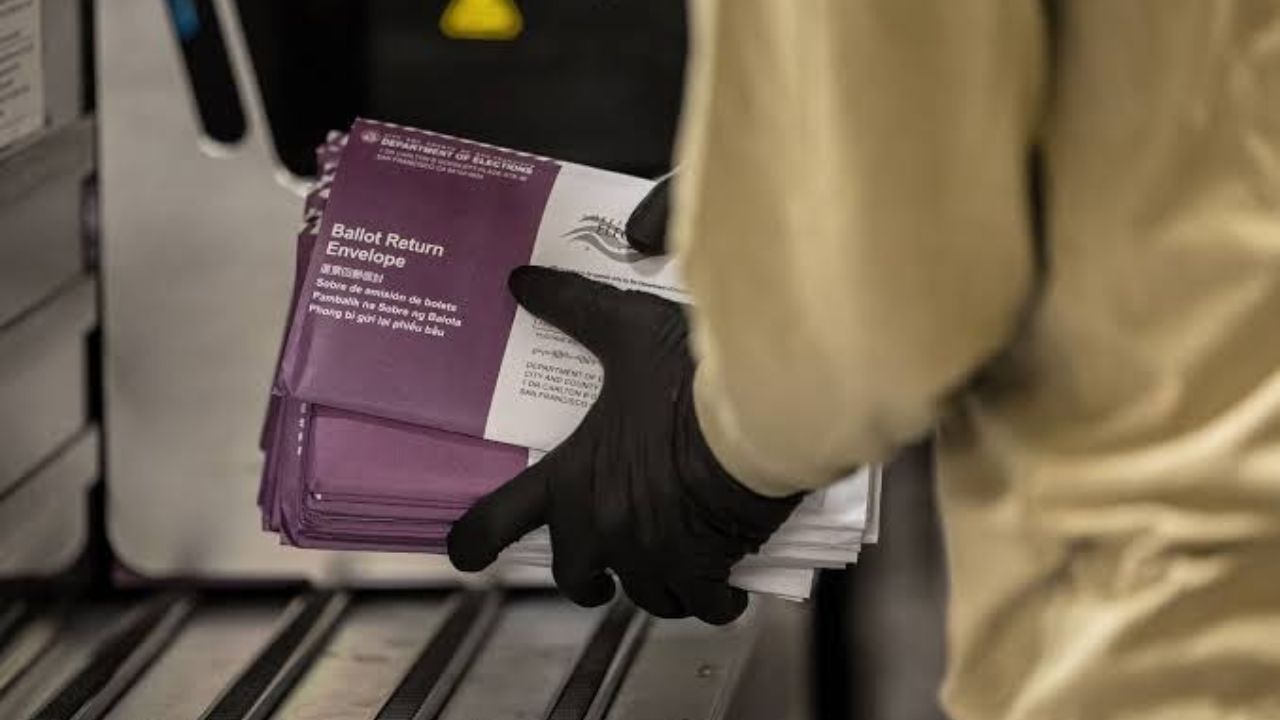
A federal appeals court on Monday rejected the Trump administration’s emergency request to require California to set aside more than 20,000 mail-in ballots linked to people the Justice Department suspects may be noncitizens. The ruling leaves the dispute before a federal district court as California’s election process continues.
A three-judge panel of the 9th U.S. Circuit Court of Appeals ruled 2-1 against the Justice Department’s request, finding that the appeals court could not intervene before the district court addressed the underlying lawsuit. The decision followed an unusual emergency hearing held Sunday via Zoom.
The Justice Department filed the lawsuit earlier this month, seeking to prevent California officials from counting ballots associated with individuals the federal government alleges may not be eligible to vote. The case is part of the administration’s broader effort to increase federal involvement in state election procedures.
The ruling did not resolve the underlying dispute over the ballots. Instead, it returned the case to the U.S. District Court in California, where a hearing was scheduled for Tuesday at 4 p.m. Eastern time.
Appeals Court Questions DOJ’s Emergency Request
Judges Mark Bennett, appointed by President Donald Trump, and Gabriel Sanchez, appointed by President Joe Biden, formed the majority. Both raised concerns about the timing and procedural basis of the Justice Department’s request.
In its opinion, the majority said the government’s claimed emergency was partly self-created, pointing to delays in filing the lawsuit and the challenges of seeking changes to California’s election procedures while ballots were already being processed.
Bennett wrote in a concurring opinion that, if the appeals court had authority to decide the case at that stage, he would have ruled against the Justice Department on the merits.
He said the federal law cited by the government did not override states’ primary authority over election administration.
Bennett also warned that granting the requested relief could create substantial difficulties for election officials and risk disenfranchising eligible voters while disrupting ballot counting.
Judges Raise Questions About Voter Data
During Sunday’s hearing, the judges also questioned the reliability of the data the federal government used to identify the more than 20,000 individuals at the center of the lawsuit.
California and Los Angeles County argued that the Justice Department’s claims relied on questionable voter data and that the state should retain authority over its election procedures. They also said the federal government’s request came while the election process was already underway.
Judge Sanchez pressed Justice Department attorney Matthew Donnelly to explain how the government and the Department of Homeland Security compiled the list of alleged noncitizen voters.
Sanchez pointed to declarations from two Homeland Security officials that referred to “third-party data or reliable third-party analytics.” He asked the government to identify the third parties involved and explain how their information was evaluated.
Donnelly said he did not have details about which third parties had been used.
Sanchez questioned how the government could establish the reliability of the list without providing that information, noting that the Justice Department’s arguments depended substantially on the accuracy of the data.
The judges also examined the source of the voter information. Donnelly said the federal government had obtained a list originally purchased from California and used it to identify individuals it believed might be noncitizens.
Samuel Siegel, an attorney representing California, argued that the administration was relying on data that was significantly outdated.
Sanchez also questioned why the district court was expected to resolve the matter within hours when substantial factual issues remained unresolved.
California Attorney General Responds to Ruling
California Attorney General Rob Bonta welcomed the appeals court’s decision, saying it supported the state’s efforts to protect voting rights and preserve its authority to administer elections.
“The court’s order serves as an important step in our efforts to protect Californians’ right to vote and our state’s authority to run fair and secure elections,” Bonta said in a statement Monday.
During Sunday’s hearing, Bennett questioned why the federal courts should override procedures adopted by California’s legislature under the Constitution’s Elections Clause, which assigns states a central role in administering elections while also giving Congress authority to regulate certain aspects of federal elections.
In a separate concurring opinion, Sanchez said the Justice Department’s proposed injunction could change California’s election rules during an ongoing election, creating confusion for voters and election officials and diverting resources from election administration.
He warned that imposing the requested changes at that stage could disrupt the state’s established procedures.
Dissenting Judge Says Federal Government Must Be Able to Act
Judge Patrick Bumatay, another Trump appointee, dissented from the ruling.
Bumatay argued that the federal government must be permitted to act when it believes noncitizens may be voting in federal elections. He maintained that neither federal law nor the Constitution prevented the government from seeking to address the alleged problem.
During Sunday’s hearing, Bumatay questioned California and Los Angeles County attorneys about how the state verifies voter citizenship and what procedures officials use to confirm eligibility.
The disagreement highlights the legal dispute over the respective roles of federal and state authorities in election administration, as well as questions about the evidence used to identify potentially ineligible voters.
What Happens Next in the California Ballot Case?
The appeals court’s decision was procedural and did not determine whether any of the individuals identified by the Justice Department were actually ineligible to vote. It also did not establish that the ballots at issue were unlawful.
The lawsuit now returns to the federal district court, where the scheduled Tuesday hearing is expected to address the Justice Department’s request.
The case could have implications for the balance of authority between federal officials and state election administrators, particularly when the federal government seeks changes to election procedures during an ongoing voting process.
Further developments will depend on the district court’s consideration of the government’s evidence, California’s legal objections and the applicable federal and constitutional provisions.
Original sources: CNN report on the appeals court ruling | Appeals court document | CNN report on the judges’ questions during the hearing
