Mary Peltola is challenging Republican incumbent Dan Sullivan in Alaska’s 2026 U.S. Senate election, bringing her experience as a former congresswoman and longtime advocate for Alaska’s fishing communities into a closely watched race. The Democratic candidate is campaigning on lowering living costs, protecting fisheries, supporting local jobs and making energy more affordable.
Peltola received 49.5% of the vote in Alaska’s August 18, 2026, top-four primary, according to election results compiled by Ballotpedia. Sullivan received 41.4%, while independent candidate Daniel J. Sullivan Jr. and Democratic candidate David Leslie also advanced initially. Leslie later withdrew, allowing Gerald Heikes to take the remaining general-election spot. Ballotpedia’s election coverage provides further details about the primary.
The Senate contest has drawn attention to Peltola’s political record, her Yup’ik heritage, her views on Alaska’s fishing and energy industries, and several controversies that have emerged during the campaign. Her opponent, Dan Sullivan, is seeking another term in the Senate.
Mary Peltola’s Early Life, Family and Education
Mary Sattler Peltola was born on August 31, 1973, in Anchorage, Alaska. She grew up in rural Alaska near the Kuskokwim River and is Yup’ik, an Alaska Native heritage that has influenced her connection to the state’s fishing traditions and Indigenous communities.
Her mother, Elizabeth Williams, came from the Yup’ik village of Kwethluk. Her father, Ward Sattler, moved to Alaska from Nebraska and worked as a teacher, principal and bush pilot. Peltola spent time fishing for salmon with her father, an experience that later became closely connected to her work on fisheries policy and rural economic issues.
Peltola attended several universities between 1991 and 1998, including the University of Northern Colorado, the University of Alaska Fairbanks, the University of Alaska Southeast and the University of Alaska Anchorage.
Her personal life has also shaped her public story. She has seven children, including four biological children and three stepchildren. Her late husband, Eugene “Buzzy” Peltola Jr., previously served as the Alaska regional director for the Bureau of Indian Affairs. He died in a plane crash in September 2023.
Mary Peltola’s Political Career
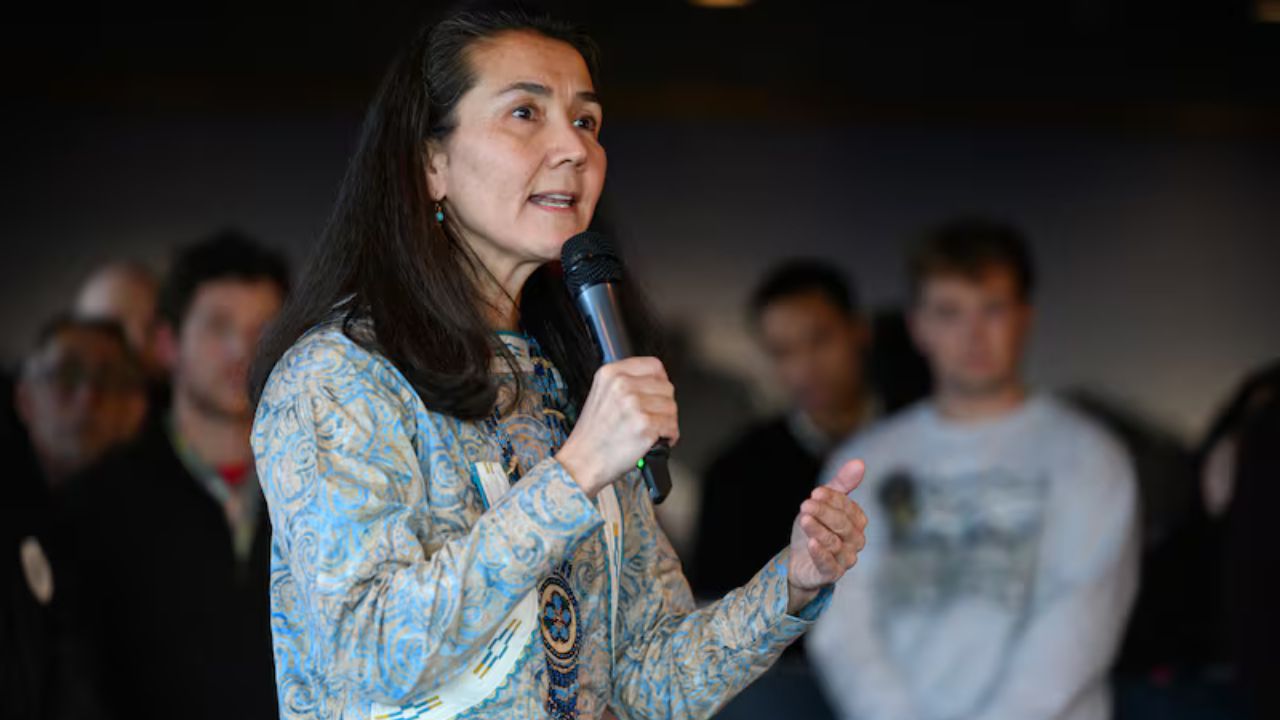
Peltola began her career in elected office in 1999, when she joined the Alaska House of Representatives. She represented communities in western Alaska and served in the state legislature until 2009.
She later served on the Bethel City Council and became executive director of the Kuskokwim River Inter-Tribal Fish Commission in 2017. Her work with the commission focused on fisheries and the interests of communities that depend on the Kuskokwim River.
In 2022, Peltola won a special election to the U.S. House of Representatives, succeeding longtime Alaska congressman Don Young. Her victory made her the first Alaska Native elected to Congress.
She served in the House from August 2022 through January 2025. Peltola lost her 2024 reelection bid to Republican Nick Begich and left Congress when her term ended in January 2025.
Her experience in the Alaska legislature, Congress and fisheries advocacy now forms a central part of her Senate campaign. She presents her background as evidence of her familiarity with the economic and geographic challenges facing communities across the state.
Mary Peltola’s Campaign Platform and Key Issues
Peltola’s campaign uses the slogan “Fish, Family, Freedom,” emphasizing Alaska’s fishing industry, household finances and local priorities. Her policy agenda centers on the cost of living, fisheries management, energy development and employment.
Grocery store prices in rural Alaska right now.
Most goods here come by barge or plane, so life here has always cost more. But this? This is as bad as it’s ever been.
This is what the price-hiking war in Iran is costing Alaskans. Dan Sullivan has now voted for it 14 times. https://t.co/Valx2OCSX6
— Mary Peltola (@MaryPeltola) October 9, 2026
Fisheries and Alaska’s Seafood Industry
Protecting fisheries is one of Peltola’s central campaign priorities. Alaska’s seafood industry supports commercial fishing operations, processing facilities, Indigenous communities and other businesses that depend on healthy fish populations.
Drawing on her background in fishing and fisheries advocacy, Peltola supports restrictions on factory trawling, measures to reduce bycatch, greater funding for fish-stock assessments and assistance for communities affected by declining fish populations.
She argues that federal fisheries policy should account for the economic and cultural importance of fishing to Alaska. Her proposals also seek to protect the long-term sustainability of the state’s seafood industry.
Cost of Living, Taxes and Childcare
Peltola has made affordability another major focus of her Senate campaign. She supports expanding the federal Child Tax Credit, improving access to childcare and reducing income taxes for working and middle-income Alaskans.
Her campaign has also highlighted the cost of transporting goods across Alaska, particularly in rural areas where communities can face high prices for basic supplies and limited access to services.
These proposals are intended to address household expenses while supporting families and workers who face the state’s high living costs.
Oil, Gas and Renewable Energy
Peltola supports oil and gas development in Alaska, including the Willow project. She has also advocated for faster federal approval processes for energy projects, arguing that resource development can support jobs and local economic activity.
At the same time, her energy agenda includes improving electricity access in rural communities and supporting renewable energy projects involving wind, solar, hydropower and geothermal power.
Her approach combines support for Alaska’s traditional energy industries with proposals to expand alternative energy sources. She has emphasized the need to make energy more accessible and affordable, especially in remote communities.
Mary Peltola’s Positions on Immigration, Jobs and Tariffs
Peltola’s record on immigration includes votes and statements reflecting different aspects of border enforcement and immigration policy.
During her 2022 congressional campaign, she said Alaska residents should receive priority for local employment opportunities. In 2023, she voted against the Secure the Border Act, which proposed stricter border enforcement and changes to asylum procedures.
In 2024, she voted for the Laken Riley Act, legislation requiring the detention of certain undocumented immigrants accused of specified crimes. She also co-sponsored the bipartisan Dignity Act, which proposed changes to border security and a process for eligible undocumented immigrants to obtain legal status.
Economic development remains another important element of her campaign. Peltola supports investment in Alaska’s natural resources and argues that oil and gas development can create jobs and strengthen local communities.
She has also criticized tariffs imposed by the Trump administration, arguing that higher trade costs can raise prices and hurt local industries. Alaska’s seafood businesses are particularly exposed to international trade conditions because many depend on overseas customers.
Peltola says lowering shipping costs and protecting Alaska-based businesses are important to improving affordability and preserving employment opportunities.
Mary Peltola’s Views on the Iran Conflict and Artificial Intelligence
Foreign policy and emerging technology have also featured in Peltola’s campaign messaging.
Peltola has opposed the U.S. military conflict with Iran and called for Congress to exercise greater oversight of presidential military actions. In May 2026, she said she would support legislation restricting the president’s authority to continue military action.
She has criticized incumbent Dan Sullivan’s support for the conflict, arguing that military decisions can have consequences for fuel prices and household energy costs in Alaska. Her position emphasizes congressional oversight and the economic effects of foreign policy.
Artificial intelligence is another issue she has raised. Peltola has called for greater government oversight of AI, citing concerns about employment, electricity demand and the financial burden of large data centers.
During an October 2026 Senate debate, she argued that technology companies operating data centers should pay for the electricity they consume rather than shifting those costs to ordinary consumers.
She has also questioned efforts to encourage more data-center development in Alaska and raised concerns about how expanding AI infrastructure could affect workers and energy prices. Her campaign has criticized Sullivan’s support for attracting technology investments to the state.
Controversies Surrounding Mary Peltola
Peltola’s campaign has faced scrutiny over allegations concerning her treatment of staff and political disputes with Sullivan.
Allegations About Her Treatment of Staff
In September 2026, The New York Times published a report describing allegations from former Peltola aides about angry outbursts, inappropriate language and a physical confrontation with a staff member during her time in Congress.
The report relied on interviews with former employees and text messages. The allegations were subsequently covered by Alaska Public Media and other news organizations.
Peltola’s campaign disputed the characterization of her behavior, saying the report exaggerated incidents and included false claims. A campaign spokesperson also pointed to the deaths of Peltola’s mother and husband in 2023, describing that period as an exceptionally difficult time in her life.
The allegations remain contested, and they should be distinguished from independently established findings. Alaska Public Media reported on the allegations and the campaign’s response.
Dispute Over Jeffrey Epstein-Related Campaign Claims
Peltola and Sullivan have also clashed over campaign advertising related to Jeffrey Epstein and the release of records associated with the convicted sex offender.
According to the campaign account provided in the original report, Peltola’s advertisements questioned Sullivan’s connections to individuals linked to the Epstein case and criticized his vote against an amendment seeking to release the files.
Sullivan rejected the accusations, describing the advertising as a smear campaign. He also pointed to his support for the final bipartisan Epstein Files Transparency Act and raised separate questions about contributions received by Peltola.
These competing claims form part of the political dispute between the candidates. Allegations about connections or campaign contributions should not be treated as proof of wrongdoing without supporting evidence.
Mary Peltola’s Net Worth and Campaign Finances
Peltola’s personal finances have also attracted attention during the Senate race.
A Newsweek report cited in the original article placed her reported net worth between $62,006 and $230,000. Such estimates should be treated cautiously because financial disclosures often provide ranges rather than a precise calculation of a public official’s total wealth.
The original report also cited campaign finance figures indicating that Peltola’s campaign received approximately $152,000 in contributions and spent around $233,000 between January 2025 and February 2026. These figures should be checked against the relevant Federal Election Commission filings before publication, as campaign receipts and expenditures change with each reporting period.
Personal net worth and campaign finances are different measures: a candidate’s personal assets do not represent the amount raised or spent by a campaign.
What Mary Peltola’s Senate Campaign Is Focused On
Peltola’s challenge to Dan Sullivan brings her record in Congress and Alaska politics back into focus. Her campaign emphasizes affordable living, fisheries protection, energy access, job creation and federal policies tailored to Alaska’s rural communities.
Her background as an Alaska Native former congresswoman and fisheries advocate is central to her public profile. At the same time, her positions on immigration, energy development, foreign policy and AI regulation provide a broader picture of her policy priorities.
As the November 3, 2026, election approaches, voters will weigh those priorities alongside Sullivan’s record, the candidates’ competing claims and the issues affecting Alaska’s economy and communities.
