
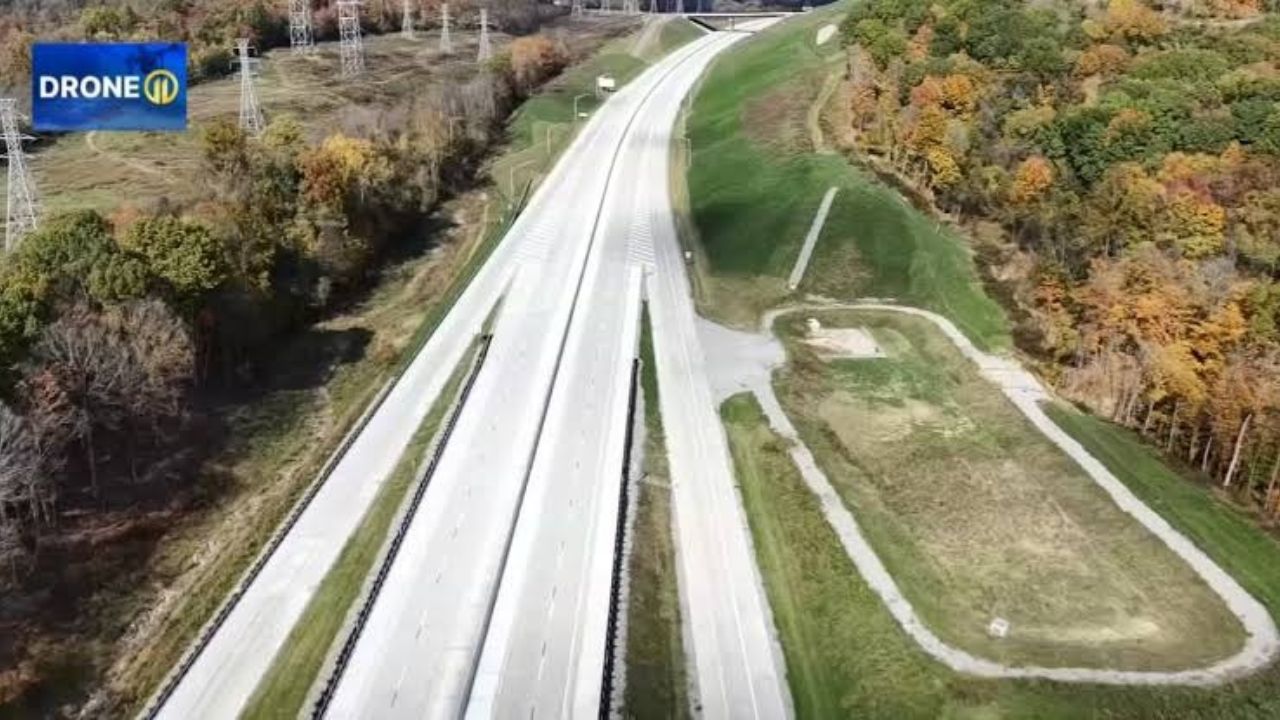
Drivers in southwestern Pennsylvania are expected to get a new stretch of the Mon-Fayette Expressway on Nov. 20, when the first two sections of its southern extension are scheduled to open ahead of Thanksgiving.
The long-awaited project will extend the expressway from Camp Hollow Road in West Mifflin to its former endpoint in Jefferson Hills, marking a significant step forward for a highway project that has been decades in the making.
Once the new sections open, the Mon-Fayette Expressway will span approximately 57 miles, connecting Interstate 68 near Morgantown, West Virginia, with West Mifflin, Pennsylvania.
For commuters and people who regularly travel through the region, the extension could offer another route through southwestern Pennsylvania. Some drivers are looking forward to the potential benefits, while others have raised questions about the project’s cost and how many motorists will use the new roadway.
“I’m excited about it overall, especially when it goes more into Pittsburgh because I do travel for a living. I think it’s going to be a lot easier and not as congested with traffic,” driver Beth Wagner said.
First Sections Scheduled to Open Before Thanksgiving
Construction on the new roadway is nearing completion, with only finishing work remaining, according to the supplied report.
State and local leaders are expected to get an early look at the extension before it opens to the public. The Pennsylvania Turnpike Commission is hosting a celebration at the project site on Tuesday, with elected officials and project partners expected to attend.
The Nov. 20 opening would give drivers access to the new sections just days before Thanksgiving, a period when many families travel to visit relatives and friends.
The extension is intended to improve connections between communities in the Pittsburgh area and locations farther south toward West Virginia. Its impact on traffic will become clearer after motorists begin using the new roadway.
A Highway Project Decades in the Making
Plans for the Mon-Fayette Expressway date back to the 1970s. The broader goal has been to connect communities in southwestern Pennsylvania with northern West Virginia while improving transportation access across the region.
Supporters have long viewed the highway as a way to make regional travel more convenient and potentially support future development and investment.
Wagner said the expressway was expected to provide an easier route between Morgantown and Pittsburgh.
“That it was going to be an easier bypass to get you from Morgantown, West Virginia, all the way to Pittsburgh,” Wagner said.
The latest extension represents another stage in a project that has taken decades to advance. For residents who have watched construction continue over the years, the planned opening is an important milestone.
However, reactions to the project are not entirely positive. While some drivers welcome the prospect of a new travel route, others remain concerned about its price and whether it will attract enough traffic to justify the expense.
Drivers Share Mixed Reactions
For Jefferson Hills resident Jonathan Schaffer, the upcoming opening is welcome news despite the lengthy construction process.
“I know it’s been taking a while; besides that, I’m excited for it to open,” Schaffer said.
Rich Borkowski of Little Boston expressed a different view, questioning the project’s cost and potential demand.
“It’s very expensive, and I don’t know who is going to use it,” Borkowski said.
Those contrasting opinions reflect the questions that often accompany major transportation projects: whether a new road will make everyday journeys easier, how much drivers will benefit, and whether its cost will be justified over time.
As the opening date approaches, attention is turning from construction to how the new sections will fit into the region’s transportation network.
The planned Nov. 20 opening is expected to mark a major milestone for the Mon-Fayette Expressway. Once drivers begin using the extension, residents will have a better opportunity to judge its practical impact on travel between West Mifflin, Jefferson Hills, the Pittsburgh area, and communities farther south.
